
Guitar Dictionary Category
Slide, Resonator & Steel Guitar
What Is a Dobro?
Dobro began as a resonator-guitar brand name created from “Dopyera Brothers.” In everyday musical speech, the word is often used for a spider-bridge resonator guitar and especially for the squareneck instrument played in bluegrass.
Not every resonator guitar is a Dobro. National-style biscuit and tricone instruments belong to the wider resonator family but use different cone and bridge systems.
The Spider-Bridge System
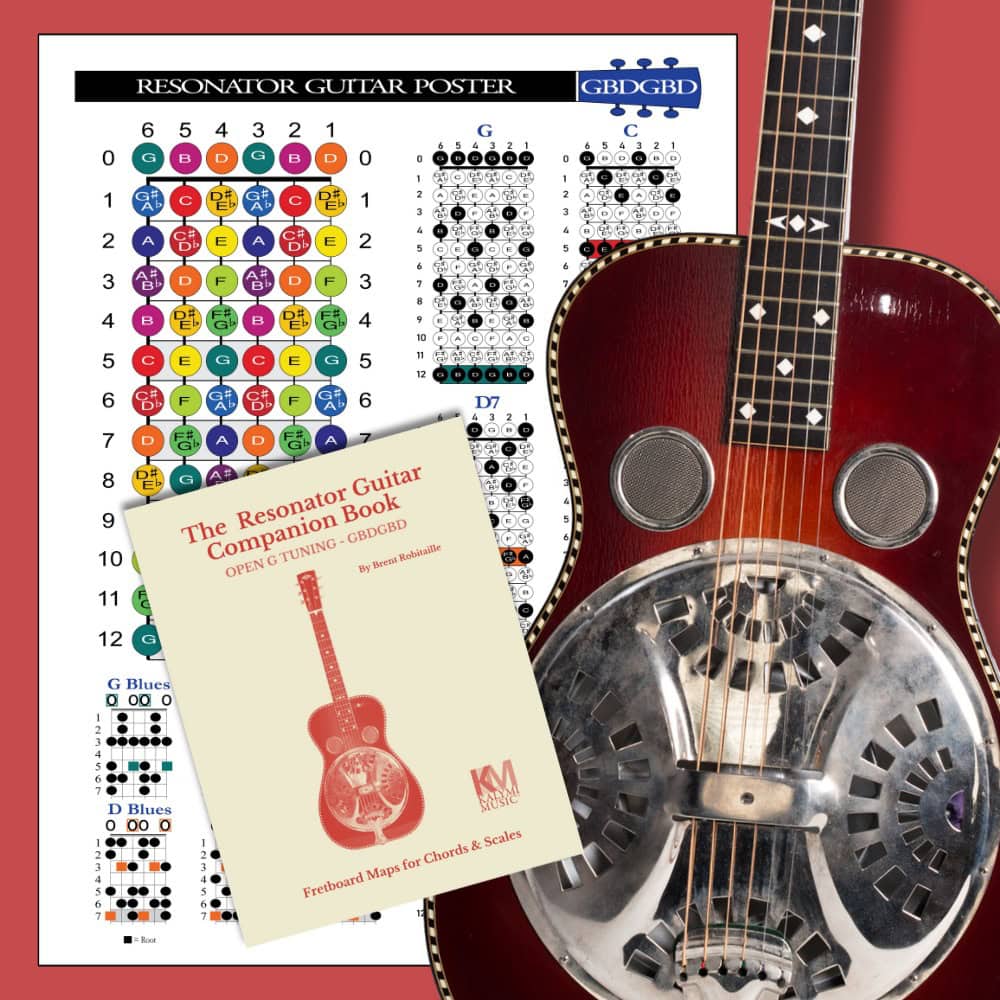
A typical Dobro-style instrument uses one inverted cone with a cast spider bridge resting around its perimeter. The saddle sits in the centre of the spider. String vibration travels through the spider into the cone.
This design is known for a clear, singing sustain that suits bluegrass rolls, backup, fills and bar technique.
Squareneck Dobro Playing
The instrument lies horizontally across the lap or is supported by a strap. The strings sit high above the fretboard and are played with a solid tone bar rather than pressed to the frets.
A thumbpick and two fingerpicks are common. Players use rolls, three-note grips, hammer-on and pull-off effects with open strings, slants, slides, muting and vibrato.
Common Open G Tuning
Bluegrass Dobro commonly uses G–B–D–G–B–D, known as high-bass Open G. This differs from six-string guitar Open G, D–G–D–G–B–D.
Both tunings form G major, but their bass strings and fretboard patterns are not interchangeable.
Roundneck Dobro Instruments
Roundneck spider-bridge resonators can be held like ordinary guitars and may be fretted or played with a finger-worn slide. The word Dobro therefore does not always mean squareneck, although bluegrass usage often points in that direction.
Why Dobro Matters
Dobro playing developed a distinct right-hand, bar and accompaniment language within the broader resonator family. Understanding the brand-derived term and the spider-bridge design prevents it from becoming a vague name for every metal-cone guitar.
Kalymi Tip
My resonator lesson identifies ten practical three-finger grips when using thumb, index and middle fingers. Practise each grip as a block and then as an arpeggio.
Make muting part of every exercise. Stop a note with the same finger that played it, then add thumb and left-hand muting for complete chord control.
Learn the open G and seventh-fret D positions before moving through every key. Those two areas provide enough harmony and scale material for many early tunes and fills.
Related Terms
Learn More
- Top 12 Tips for Resonator and Lap Steel Guitar
- Open G Resonator Poster and Companion eBook
- Open Tunings Guitar Learning Path
- Open G Guitar Guide
- National Reso-Phonic History
- Beard Resonator Parts and Spider System
Reviewed by
Brent C. Robitaille,
music educator and founder of
Kalymi Music.