Mandolin Learning Path
GDAE / CGDA • lessons • videos • audio
Mandolin Learning Path (Mandolin, Octave Mandolin, Mandola, Mandocello)
Created and maintained by Brent C. Robitaille (Kalymi Music) — author of 60+ instructional music books.
A structured learning path for the mandolin family: mandolin (GDAE), octave mandolin (GDAE an octave lower), mandola (CGDA), and mandocello (CGDA an octave lower). Start with free lessons + videos + audio. Add posters/books only when you want structure and volume.

Choosing your first instrument?
Is Mandolin the Right First Instrument for You?
Mandolin combines melody and chords in a compact instrument and is particularly well suited to bluegrass, Celtic, country, and folk music. Compare it with guitar, ukulele, fiddle, and cigar box guitar before you begin.
What this path helps you do
- Get playable fast (timing + one clean "win")
- Use chords and progressions to make real music
- Finish tunes end-to-end using audio play-alongs
- Build repertoire through Celtic tunes, blues riffs, audio play-alongs, and reference materials
Frequently Asked Questions About Mandolin
Quick answers to common mandolin questions for beginners and intermediate players.
Quick answers: Standard mandolin tuning is GDAE (same as violin). Octave mandolin uses GDAE an octave lower. Mandola and mandocello use CGDA tuning. Fingering patterns transfer across all instruments—only the tuning and register change.
1. What is mandolin tuning?
Standard mandolin tuning is GDAE (low to high), the same as a violin. The strings are tuned in perfect fifths: G-D-A-E. Each string is doubled (course), giving the mandolin its characteristic bright, ringing sound.
2. What's the difference between mandolin, octave mandolin, mandola, and mandocello?
Mandolin: GDAE (standard pitch). Octave mandolin: GDAE tuned one octave lower. Mandola: CGDA (tuned a fifth below mandolin). Mandocello: CGDA tuned one octave below mandola. All use the same fingering patterns, just in different registers.
3. Is mandolin hard to learn?
Mandolin is accessible for beginners. The fretted fingerboard makes intonation easier than violin, and basic chords are simpler than guitar. The main challenges are building finger strength for the doubled strings and developing clean tremolo technique. Most players can play simple melodies within a few weeks.
4. What are the best beginner mandolin songs?
Start with folk melodies like “Boil Them Cabbage Down,” “Angeline the Baker,” or “Red Haired Boy.” Celtic tunes work well (see Step 3). Simple blues progressions and holiday songs are also excellent for building timing and muscle memory.
5. Can I use this learning path for octave mandolin?
Yes. Octave mandolin uses the same GDAE tuning, just one octave lower. All fingerings, chord shapes, and scale patterns transfer directly. The only difference is the lower register and slightly larger body.
6. Can I use this learning path for mandola or mandocello?
Yes. Mandola and mandocello use CGDA tuning (like viola/cello). The harmony logic transfers cleanly. Chord shapes are the same, just in a different key center. The mandola chord poster is specifically designed for CGDA tuning. See the full Mandola Chord Reference (CGDA) for a free chord sampler and fretboard chart.
7. How should I use the YouTube playlists?
Treat them like an indexed library: pick one topic (chords, blues riffs, or a complete tune), practice for 7 days, then move on. Don’t binge-watch. Use the videos as reference while practicing with the audio play-alongs.
8. What's the difference between mandolin and mandola tuning?
Mandolin: GDAE (same as violin). Mandola: CGDA (same as viola). Mandola is tuned a perfect fifth lower. Think of it as the viola of the mandolin family. Fingering patterns are identical, just in a different pitch range.
Mandolin Family Quick Reference
All instruments in the mandolin family use similar fingering patterns, just in different tunings and registers.
Key insight: Fingering patterns transfer across the entire family. If you learn a chord shape on mandolin (GDAE), the same shape works on octave mandolin (just sounds lower). Mandola and mandocello use the same shapes in CGDA tuning.
What’s Inside the Free PDF
The free Mandolin Starter Pack is designed to remove the guesswork and get you playing quickly on mandolin (GDAE), octave mandolin, and mandola / mandocello (CGDA).

Inside the Starter Pack
- How to read tab + chord diagrams
- Fretboard charts (GDAE and CGDA up to 12th fret)
- 12-bar blues in G (major + dominant 7th chord shapes)
- Finger exercises for clean technique
- Blues in G (beginner piece with two variations)
- Minuet in G (intermediate piece with fingerings)
- 10–20 minute daily practice routine
Get the Free PDF
Enter your email and I’ll send the Mandolin Starter Pack to your inbox.
How to Use the Starter Pack
Follow the 4-step sequence in the PDF: learn to read → learn the fretboard → play chords in a progression → build technique → finish tunes.
You’re ready to move on when:
- You can play the 12-bar blues progression without losing time
- You can play one finger exercise cleanly at a steady tempo
- You can play one full piece end-to-end (even slowly)
Step 1
Get playable fast
Your only job here is one clean musical result: a chord change, a short melody, or a 2–4 bar riff. Use the playlists as a library and pick one focus for 7 days.
Do this
- Tune + timing: slow and steady (clean > fast)
- One focus: chords OR melody OR riff (don’t hop)
- Use audio: play along daily as your timing rail
Milestone: you can play one short piece (or riff chain) end-to-end without stopping.
Step 2
Chords + progressions
This step turns shapes into songs. Learn chord families, then apply them to progressions with steady rhythm. Octave mandolin uses the same tuning as mandolin (GDAE). Mandola and mandocello use CGDA (different register).
Do this
- Chord families: major, minor, 7, m7, 6, maj7, dim7, aug
- Progressions: practice 2 progressions in time (slow tempo)
- Reference: poster / cheat sheet = frictionless practice
Milestone: you can comp through 2–3 progressions without stopping, at a slow steady tempo.
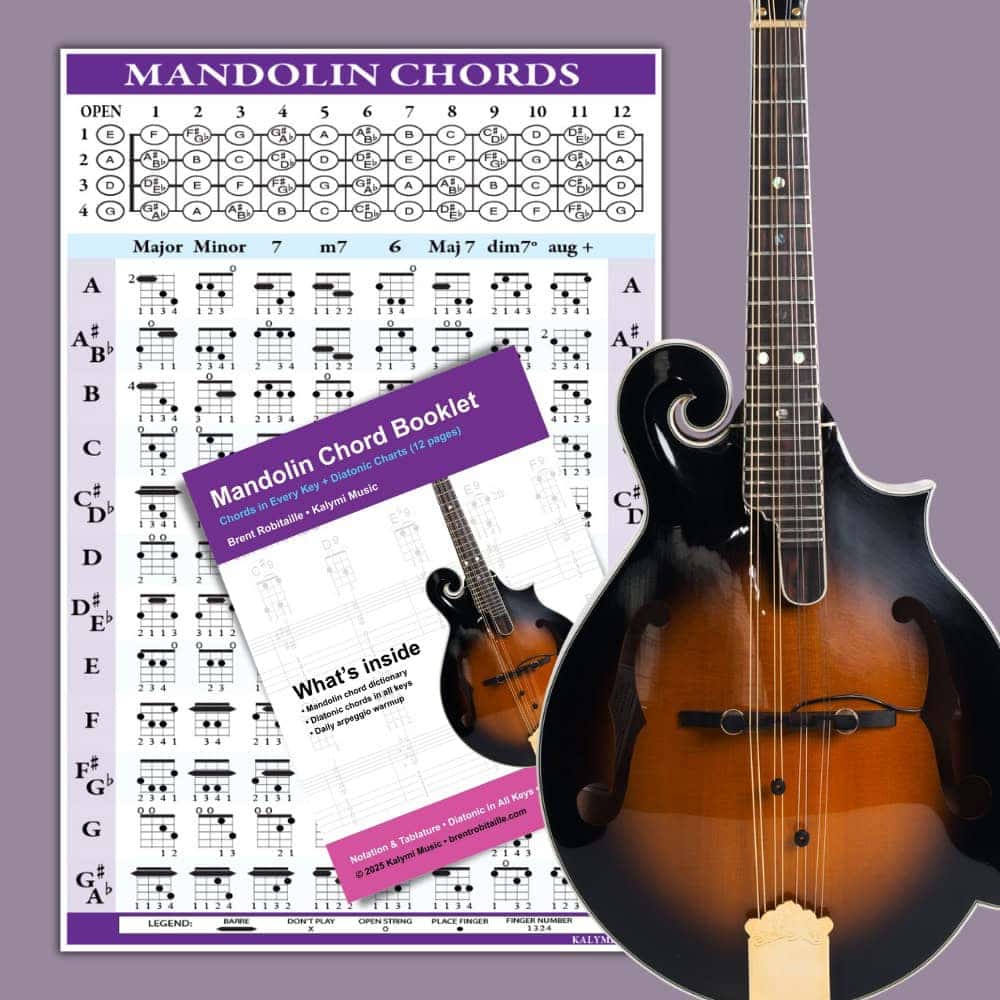
Mandolin or Octave Mandolin G-D-A-E
Bonus 12-page eBook (Included with Mandolin poster)
Every poster purchase includes my Mandolin Bonus Chord Booklet (PDF, 12 pages), featuring:
- Chord families in every key for quick reference
- Diatonic chord cheat-sheets for faster harmony decisions
- A daily arpeggio warm-up to connect shapes with musical movement
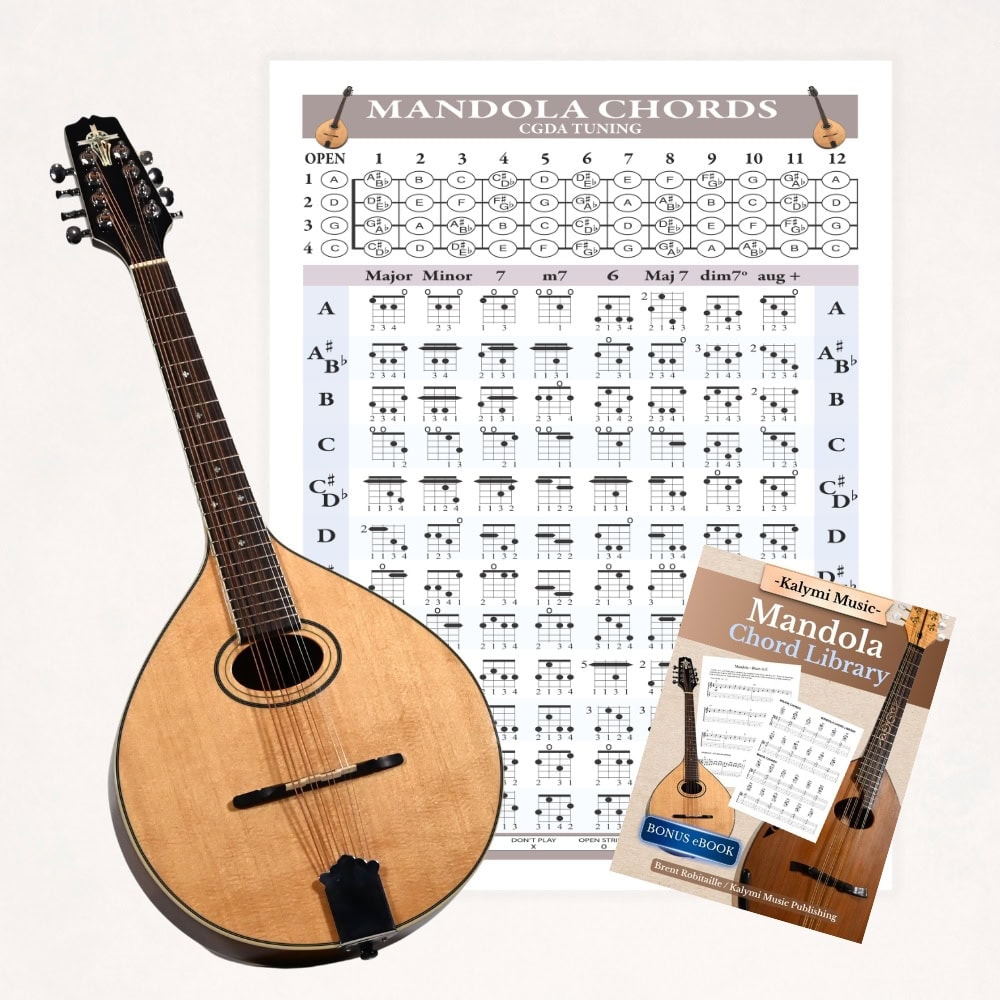
Mandola or Mandocello C-G-D-A
Bonus 12-page eBook (Included with Mandola poster)
Every poster purchase includes my Mandola Bonus Chord Booklet (PDF, 12 pages), featuring:
- Chord families in CGDA tuning for quick reference
- Diatonic chord cheat-sheets for faster harmony decisions
- A daily arpeggio warm-up to connect shapes with musical movement
Mandola or Mandocello C-G-D-A
Bonus 12-page eBook (Included with Mandola poster)
Every poster purchase includes my Mandola Bonus Chord Booklet (PDF, 12 pages), featuring:
- Chord families in CGDA tuning for quick reference
- Diatonic chord cheat-sheets for faster harmony decisions
- A daily arpeggio warm-up to connect shapes with musical movement
→ See the complete Mandola Chord Reference (CGDA) — free chord sampler + fretboard chart
Step 3
Tunes + audio (Celtic, blues, holiday)
Arrangements hub →Now you finish complete pieces and lock in phrasing. Use the audio sets as your timing and tone targets, and use the arrangements hub to pick one piece you can finish this week.
 NEW 2nd EDITION · 56 TUNES
Featured Celtic Tune Book
Celtic World Collection – Mandolin — 56 Celtic, traditional, and original tunes with notation, tablature, chords, ornamentation, scales, and reference material.
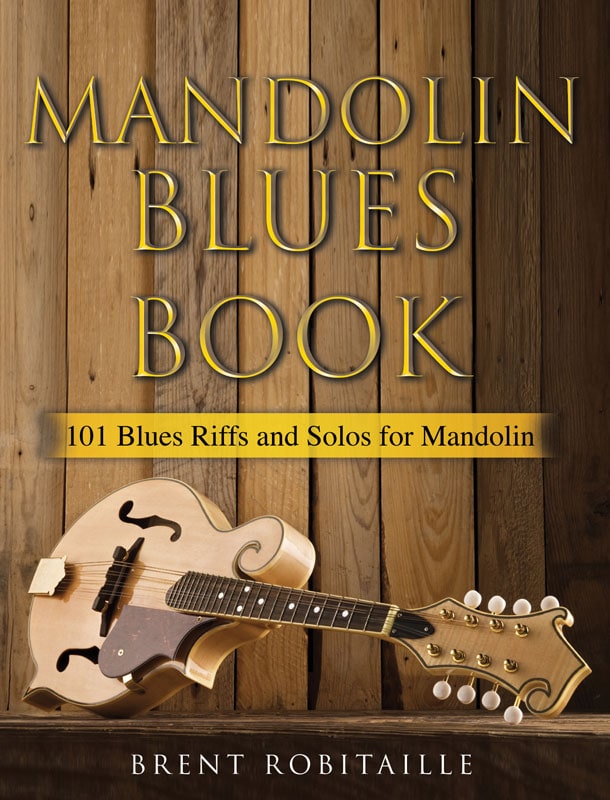 BEST SELLER · 101 RIFFS & SOLOS
Featured Blues Book
Mandolin Blues Book — 101 blues riffs and solos across 157 pages: stylistic riffs, 12-bar rhythm and extended solos, scales, arpeggios, chord library, and progressions.
Audio play-alongs (SoundCloud sets)
YouTube: Getting started
- Mandolin Blues Book – Overview (Start here)
- 12 Bar Basic Blues Chord Progression
- 12 Bar Standard Blues Progressions
- 12 Bar Jazz Blues Chord Progressions
- 12 Bar Minor Blues Chord Progression
- → Full Mandolin Playlist (All Videos)
YouTube: Complete songs
- Learn 4 Mandolin Blues Songs – Play Along
- Hoochie Coochie Man – Willie Dixon
- The Thrill is Gone – B.B. King
- Hotel California Duet – Guitar & Mandolin
- Carolan’s Concerto – Celtic
- Beethoven – Mandolin Sonatina in C
Mandocello note: Mandocello uses CGDA (an octave lower than mandola). The same harmony logic applies, and Celtic-focused mandocello resources can be added here as they’re released.
📚 Blues Riff Library (50+ videos) — Click to expand
All 50 blues riffs from the Mandolin Blues Book, plus short-form demos. Use these to build your vocabulary.
Riffs 1–25:- Riff 1
- Riff 2
- Riff 3
- Riff 4
- Riff 5
- Riff 6
- Riff 7
- Riff 8
- Riff 9
- Riff 10
- Riff 11
- Riff 12
- Riff 13
- Riff 14
- Riff 15
- Riff 16
- Riff 17
- Riff 18
- Riff 19
- Riff 20
- Riff 21
- Riff 22
- Riff 23
- Riff 24
- Riff 25
🎵 Additional Repertoire (Blues, Celtic, Classical, Popular) — Click to expand
Resources + complete library
Everything in one place: website hubs, posters, playlists, and audio sets.
Website
- Mandolin Lessons (Blog Category)
- Mandolin Books / Sheet Music / Posters (Shop Category)
- Mandolin Arrangements (Hub)
- Celtic World Collection – Mandolin Companion Page — audio, videos, MuseScore examples, and searchable tune index
Posters
Explore Other Instruments
If you’re enjoying the mandolin learning path, you might also like these structured learning paths:
Master Open D, Open G, and DADGAD for blues, slide, and Celtic guitar. Blues riffs, chord progressions, and fingerstyle repertoire.
Learn 3-string and 4-string cigar box guitar in Open G and GDAE tunings. Blues, slide, and roots music for homemade instruments.
Complete ukulele learning path covering chords, strumming, fingerstyle, and Hawaiian/jazz styles. Perfect for beginners.
Build loop-based compositions, layer rhythms and melodies, and create one-person band performances with looper pedals.
Boilerplate text to link back to this learning path
Copy/paste these into related blog posts, product pages, and YouTube descriptions for consistent internal linking.
Standard link text
For a complete structured learning path covering mandolin (GDAE), octave mandolin, mandola (CGDA), and mandocello — including chords, blues riffs, Celtic tunes, and audio play-alongs — visit the Mandolin Learning Path.
Short version
See the complete Mandolin Learning Path for structured lessons in mandolin, octave mandolin, mandola, and mandocello.
Anchor link version (for specific sections)
This lesson is part of the Mandolin Learning Path. Jump to chords & progressions, blues & tunes, or all resources.
YouTube description version
📚 Complete Mandolin Learning Path: https://brentrobitaille.com/mandolin-learning-path/
→ Free lessons, chords, blues riffs, Celtic tunes, audio play-alongs
→ Works for mandolin (GDAE), octave mandolin, mandola (CGDA), and mandocello