Find Your First Guitar Scale (90 seconds)
Not all scales are created equal. Answer a few questions and I'll tell you which scale to start with, how to learn it, and what comes next.
Why scales matter (and how I teach them)
After 40+ years of teaching
I start with pentatonics because they're the easiest. Only 5 notes. They work for improvising because they avoid the 4th and 7th, which means you can use them in blues, rock, country, classical, pretty much any music. The trick is to keep it simple. Start with one octave in C. Get the student to say the note names: 1, 2, 3, 5, 6. After they have one octave down, I add in the b3, then the b7 if it's blues.
Then we move to the major pentatonic and learn the relative minor. C major and A minor are the same notes, different positions. You can apply the minor on a major chord and vice versa. Most students start with a very mechanical way of playing. But once you realize that your pick or fingers need to add rhythm, then things start to gel.
The main scale families
These are the scales that actually matter. Not every variation ever created, just the ones that solve real musical problems.
Minor Pentatonic
The scale that works everywhere. Blues, rock, country, folk, riffs, lead lines. Learn this first.
Major Scale
The parent scale. Explains keys, chords, intervals, modes, and how music fits together.
Blues Scale
Minor pentatonic plus the blue note. This is what makes blues sound like blues.
Natural Minor
The darker seven-note scale. Essential for minor-key songs and classical work.
Major Pentatonic
Clean, major-key sound for country, folk, pop, and sweeter phrasing.
Modes
Seven sounds built from the major scale. Learn these once the major scale makes sense.
See and hear the scales
Listen to each scale clean, then over a backing track so you hear it in context.
C Major and A Minor Pentatonic
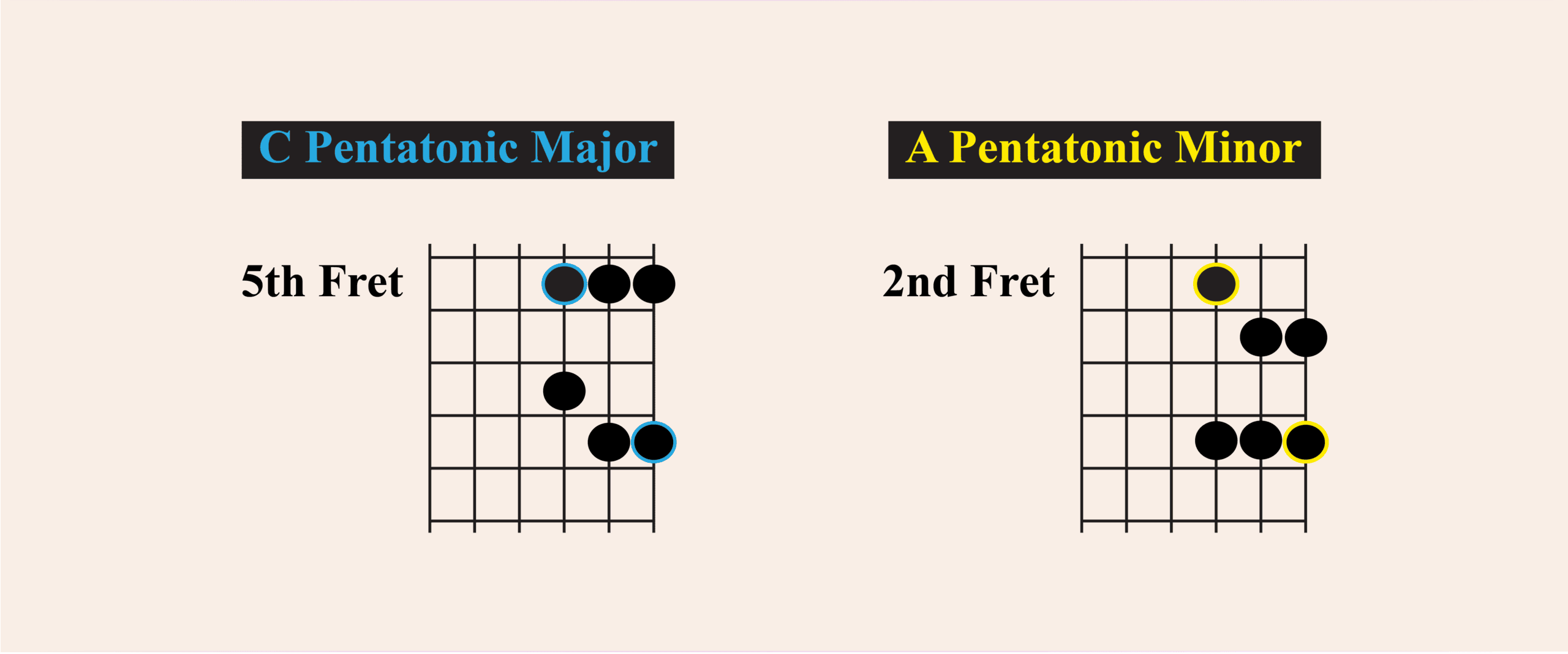
Watch: The Scale + 3 Rhythmic Variations
G Major and E Minor Pentatonic
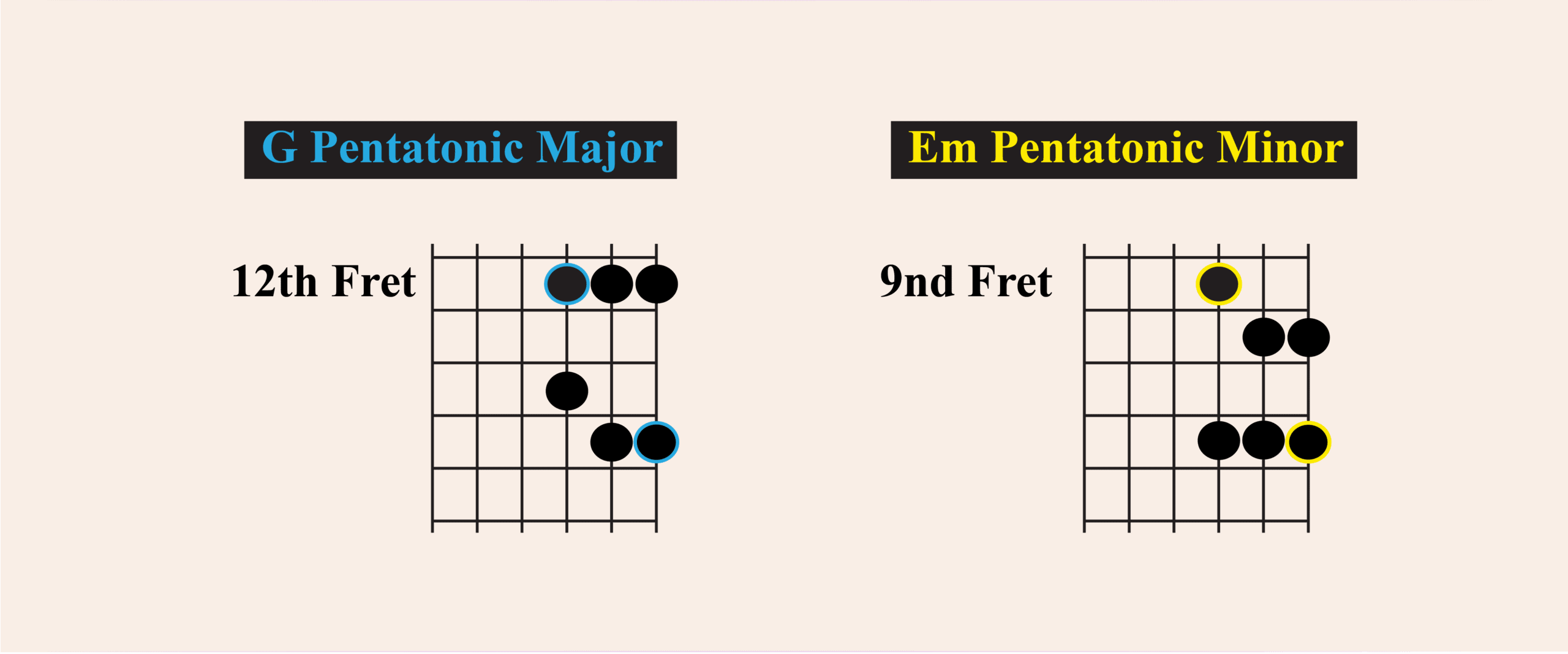
Next step: practice your pentatonics with backing tracks
Find the key of the backing track and match it up with your pentatonics above. For example, the first track says Am so look for the A minor pentatonic scale. etc
Pick one backing track. Find the scale diagram for that key (C, A, E, or G). Play the shape over the groove. Focus on rhythm, not speed. Want the backing tracks to practice offline? Get the free PDF download with all tracks.
Scales need rhythm to make sense
Learning scales in isolation is abstract. These looper books are the bridge between scale patterns and real music. You play a scale over actual chord progressions, drum grooves, and bass lines.
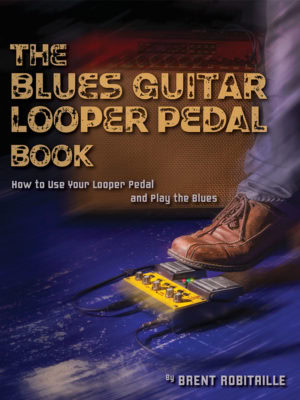
Blues Guitar Looper Book
Pentatonic phrasing, blues scales, 12-bar changes, slide ideas, and turnarounds over actual loops.
View Book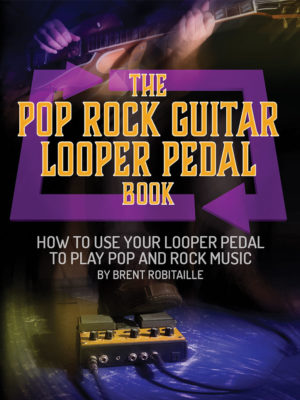
Pop/Rock Looper Book
Building practical loops with riffs, bass lines, chords, rhythm parts, and lead ideas over real progressions.
View Book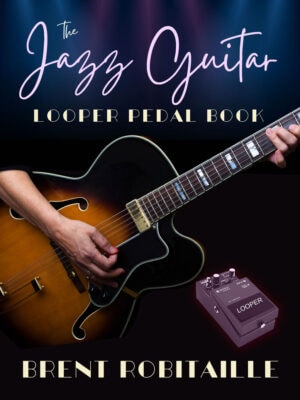
Jazz Looper Book
Modes, arpeggios, chord tones, ii-V-I changes, jazz phrasing, and soloing over repeating progressions.
View BookFree Guitar Scale Quick Reference + Backing Tracks
Scale diagrams alone aren't enough. This free package includes one-octave and expanded pentatonic patterns, teaching instructions, and links to download all 7 backing tracks for practice in multiple keys.

This is what's inside the PDF:
- 6 scale diagrams (1 octave + expanded)
- Teaching guide & practice tips
- 7 backing track download links
- Transposition guide
Get your free PDF with one-octave and expanded pentatonic patterns, teaching guide, and download links for 7 backing tracks to practice in multiple keys.
Scale posters for deeper study
The free PDF gets you started. These posters are for serious study: complete full-neck systems, arpeggios, chord connections, and reference material. Order the poster or download the PDF.
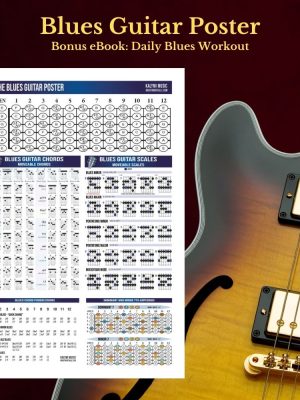
Blues Guitar Poster
Pentatonic and blues scales in all positions, Mixolydian sounds, full chord chart, arpeggios, fretboard maps, and blues progressions.
View Blues Poster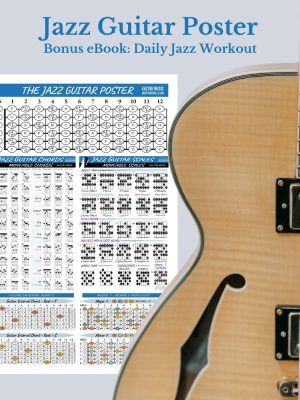
Jazz Guitar Poster
All seven modes, major and harmonic minor scales, jazz chord-scale connections, arpeggios, intervals, and fretboard maps.
View Jazz PosterWhere scales fit in a complete system
A scale chart is a reference tool. To develop real fluency, you need a practice path that connects scales to chords, rhythm, songs, and fretboard landmarks.
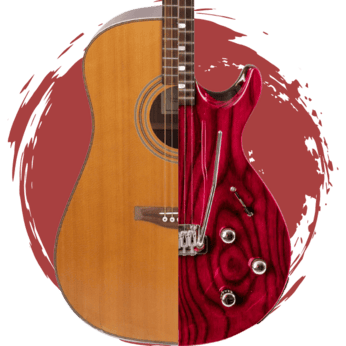
Guitar Learning Path
Standard tuning development: chords, rhythm, songs, theory, soloing, fingerstyle, slide, and fretboard skills.
Explore Path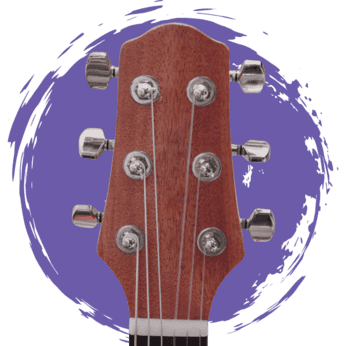
Open Tunings Path
Open D, Open G, DADGAD, Drop D, slide, blues, Celtic, roots, and alternate-tuning fretboard work.
Explore Path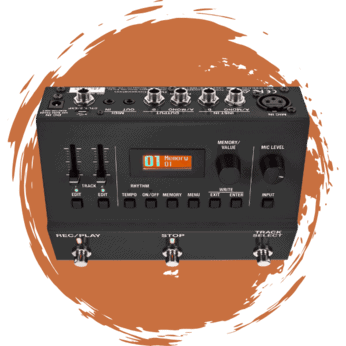
Looper Guitar Path
Timing, layered parts, rhythm, harmony, riffs, lead lines, and practical loop-building.
Explore Path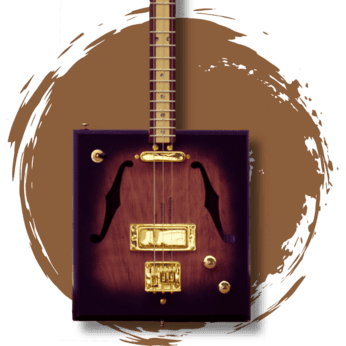
Cigar Box Guitar Path
6 strings too many? Ever tried a 3-string guitar before? Learn basics, slides, open tunings, and roots music.
Explore PathQuestions
Do I really need to learn all 5 pentatonic shapes?
Not at first. Learn one position, find the roots across the neck, make it musical over backing tracks. Then connect the other shapes. It sticks better this way.
Should I start with notation or diagrams?
Diagrams. Start with what you can see and play immediately. Notation comes next once you're comfortable with the fretboard.
What's the difference between minor and major pentatonic?
Minor pentatonic is darker and works for blues, rock, minor-key songs. Major pentatonic is brighter, works for country, folk, major-key melodies. They're the same notes, different starting points.
How long until I can actually use these scales?
If you practice minor pentatonic over a backing track for 15 minutes a day, you'll be making recognizable music within a week. That's the point. Scales aren't theory. They're tools for playing.
Do I need backing tracks?
Yes. Scales in isolation are abstract. Rhythm and drums give them meaning. That's why the free PDF includes backing tracks.
Your next step
Use the quiz to find your path. Get the free PDF with backing tracks. Then choose the poster or looper book that matches your style.