
Robert Critchley is a musician and songwriter and composes music for film and television. He has 30 years of experience recording, editing and mixing custom recording projects. His music has recently been featured on “American Pickers” on the A&E television network and two award-winning short films; Niagara Thunder Of The Waters and Apples From Eden.
Today we are pleased to have composer Rob Critchley adding some great tips for aspiring composers and songwriters. It seems obvious, but Rob reinforces that the first step to becoming a songwriter or composer is mastering your instrument. Please leave your comments and suggestions for more posts below.
Why Your Instrument Matters for Songwriting and Composition
Songwriters and composers do not need to be virtuosos, but they do need enough command of an instrument to test ideas, build chord progressions, shape melodies, and communicate musical direction. Guitar, piano, keyboard, mandolin, ukulele, violin, or another instrument can become the workspace where musical ideas become real.
Quick answer: your instrument helps you write better songs because it gives you a practical musical vocabulary. The more chords, rhythms, voicings, patterns, and sounds you can find under your hands, the easier it is to develop original ideas.
Use this article as a reminder that songwriting is not only about inspiration. It is also about building enough practical skill to hear an idea, find it on your instrument, shape it, record it, and keep improving it.
Choose a Learning Path for Your Main Instrument
Practice planner tip: songwriters make faster progress when practice time includes both skill-building and idea capture. Try planning one technical goal, one songwriting goal, and one review session each week.
Guest songwriting article by Rob Critchley on Kalymi Music. Learning paths and practice resources by Brent C. Robitaille / Kalymi Music.
Your instrument is essential to your success as a composer
Develop your musical vocabulary on guitar or piano. Get to know your way around your instrument so that you can put your ideas together and then have a means to communicate those ideas to others. If you have a limited vocabulary on your instrument, such as only knowing three chords on guitar, then you will find it difficult to explore fresh ideas in chord movement and harmonization.

My top three tips for becoming a composer/songwriter
- Take some lessons with a vision to express creativity through what you learn.
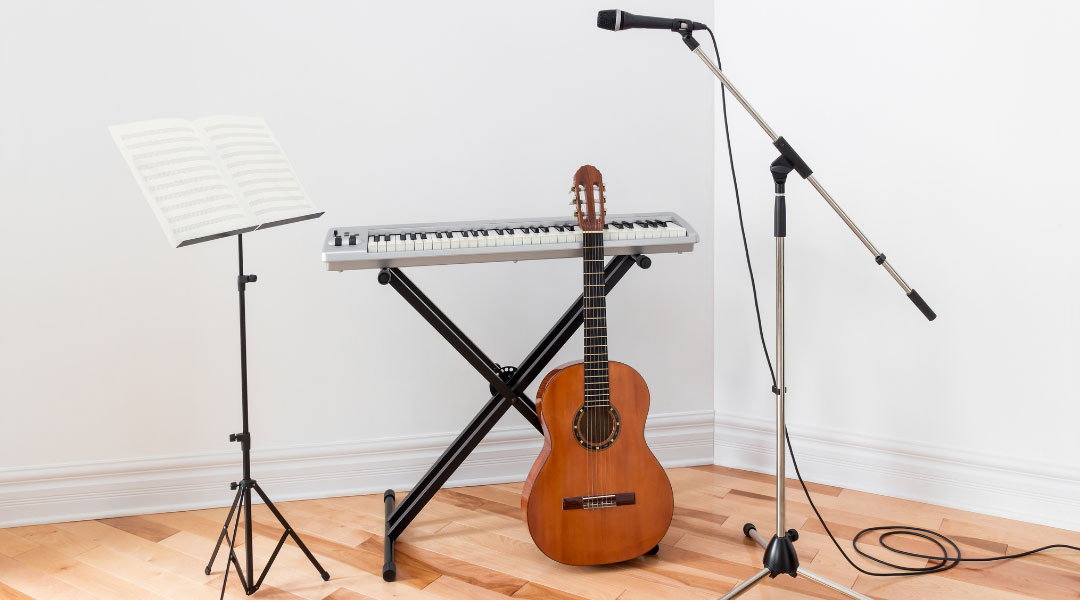
- Acquire an instrument that inspires you to play, listen and create upon it. The guitar that never keeps tune or the keyboard that sounds like Mario Brothers (which actually could be cool if you were writing gaming music) will not do much to stimulate your process.
- If you play an instrument at a functional level, consider learning a computer music program (DAW) to help you capture your ideas and develop them. Logic, ProTools, Ableton and others will not only help you write but they will also enable you to explore music production which is a valuable extension of the creative process and will help you collaborate with others.

Listen to Rob’s music and stay tuned for more posts! Also, check out my blog for more songwriting, arranging and composition including my 3 tips for becoming a better musician.
Recent Comments